
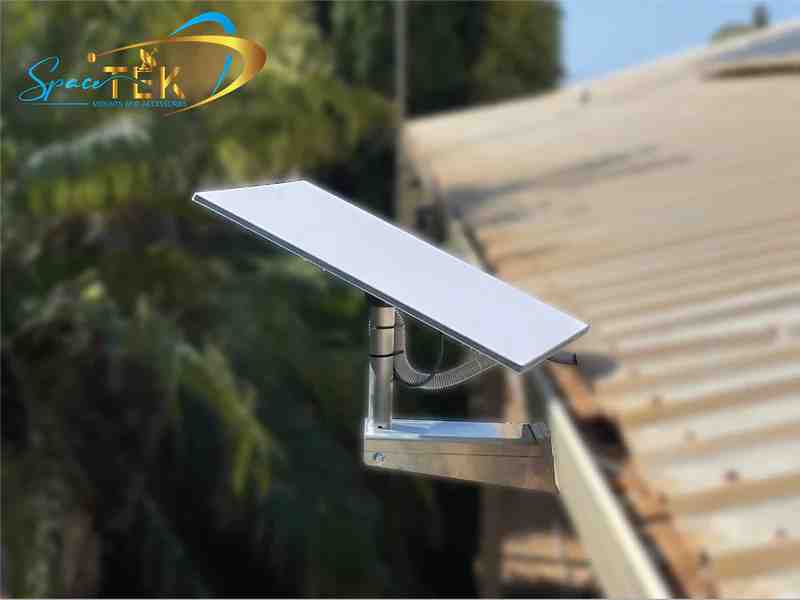
Australian weather can be rough on a dish mount, especially with salt air, heavy rain and constant movement on unsealed roads. Choosing a UV rust-resistant mount gives your Starlink setup a stronger, more dependable base for everyday use.
Key Takeaways
- Australian UV can fade and crack basic coatings, exposing metal to moisture.
- Salt spray can travel well inland and speed up rust and pitting on ordinary hardware.
- Hot days and cool nights can loosen fasteners as materials expand and contract.
- Precision-machined or folded aluminium dish mounts suit coastal, rooftop and mobile setups.
- Choosing rust-resistant dish mounts helps keep your equipment secure and your signal aligned in tough conditions.
Once corrosion starts, a dish mount can lose strength where it matters most. Wind loads put ongoing pressure on the mount, and rust-weakened joints or damaged mounting surfaces can make alignment harder to maintain. Good-quality hardware gives your Starlink setup a better chance of staying firmly in place.
What Materials Provide the Best Weatherproof Longevity?
Not every metal option is equally suited to life outdoors. Cold-rolled steel depends on its painted or zinc-plated surface, so one knock or scratch can leave bare metal exposed to the elements.
For a dish mount built to stay outside for years, look for materials with natural corrosion resistance:
- 5052 marine-grade aluminium offers strong resistance to salt spray without adding unnecessary weight.
- 316 marine-grade stainless steel includes molybdenum, which helps it resist chloride-related pitting near the coast.
- Industrial powder coating adds a tough barrier against rain, grime and direct sunlight.
- Anodised aluminium creates a durable finish that will not flake or peel like a basic coating.
SpaceTek uses precision-machined or folded aluminium and reinforced composite builds. A corrosion-resistant Starlink mount is a practical choice when wind, heat and vibration are part of everyday use.
How Do UV-Stabilised Polymers Compare for Outdoor Cable Management?
A dish mount needs a tough metal structure, while cable guides and small utility clamps need to stay flexible in the weather. Indoor ties and untreated plastic clips often become brittle outside, which can leave cables unsecured.
For cable hardware that spends years outdoors, UV-stabilised Nylon 6/6 is worth considering. Carbon black stabilisers help it handle sunlight while keeping the material flexible enough for reliable cable retention.
- Thermal tolerance: UV-stabilised Nylon 6/6 handles cold conditions and high summer roof temperatures.
- Tensile retention: High-grade stabilised polymers hold up better during long periods of direct sun exposure.
- Cable protection: Secure, weather-resistant retention helps stop communication leads rubbing on sharp roof edges, protecting your Starlink cable from UV damage and water ingress.
Which Hardware Options Suit Extreme Australian Conditions?
The right dish mount depends on where and how you use it. Whether you are touring off-road, travelling with a caravan or mounting Starlink on a home roof, the hardware needs to handle Australian weather and everyday vibration.
What Makes a UV Rust-Resistant Mount Useful for Coastal and Mobile Rigs?
Salt air at the coast and vibration on the road can both test a dish mount quickly. A caravan or touring setup may cop corrugations and jolts, while a fixed seaside installation deals with regular moisture in the air.
When you are comparing mounting options for those environments, prioritise hardware that includes:
- Vibration damping to reduce movement on corrugated roads.
- Folded aluminium construction for rigidity without unnecessary weight on roof racks and caravan canopies.
- Sealed pivot points that resist salt build-up and remain easy to adjust while travelling.
If you are fitting out a touring vehicle or compact setup, the Starlink Mini Mobility Mount keeps the profile low while handling high winds and outback travel. Matched with appropriate roof-rack hardware, it is a solid option for staying connected on the move around Australia.
How Do You Select Heavy-Duty Utility Mounts and Clamps?
For utility dish mounts and rooftop clamps, the mounting surface matters just as much as the equipment itself. Before choosing a permanent or semi-permanent setup, make sure it covers the following basics:
- Load capacity that suits the equipment and expected wind exposure without excess flex.
- Multi-diameter clamping with broad contact surfaces to spread pressure evenly.
- Precision-machined aluminium surfaces that fit neatly together and reduce places where moisture can collect.
Whether you are securing hardware to a custom caravan mast or an elevated rooftop pole, folded aluminium or high-strength reinforced composite equipment can deliver reliable service without constant part replacements.
How Should You Install and Maintain Outdoor Mounts for Maximum Lifespan?
Good materials only perform as well as the installation behind them. Setting the mount up carefully from day one helps reduce corrosion, keep water out of roof penetrations and hold everything steady when the wind picks up.
How Do You Install a UV Rust-Resistant Mount to Prevent Galvanic Corrosion?
Galvanic corrosion can occur when dissimilar metals touch while rainwater or salt spray is present. For example, stainless steel fasteners against a coated steel roof or aluminium mount can cause the more active metal to corrode faster and weaken the joint.
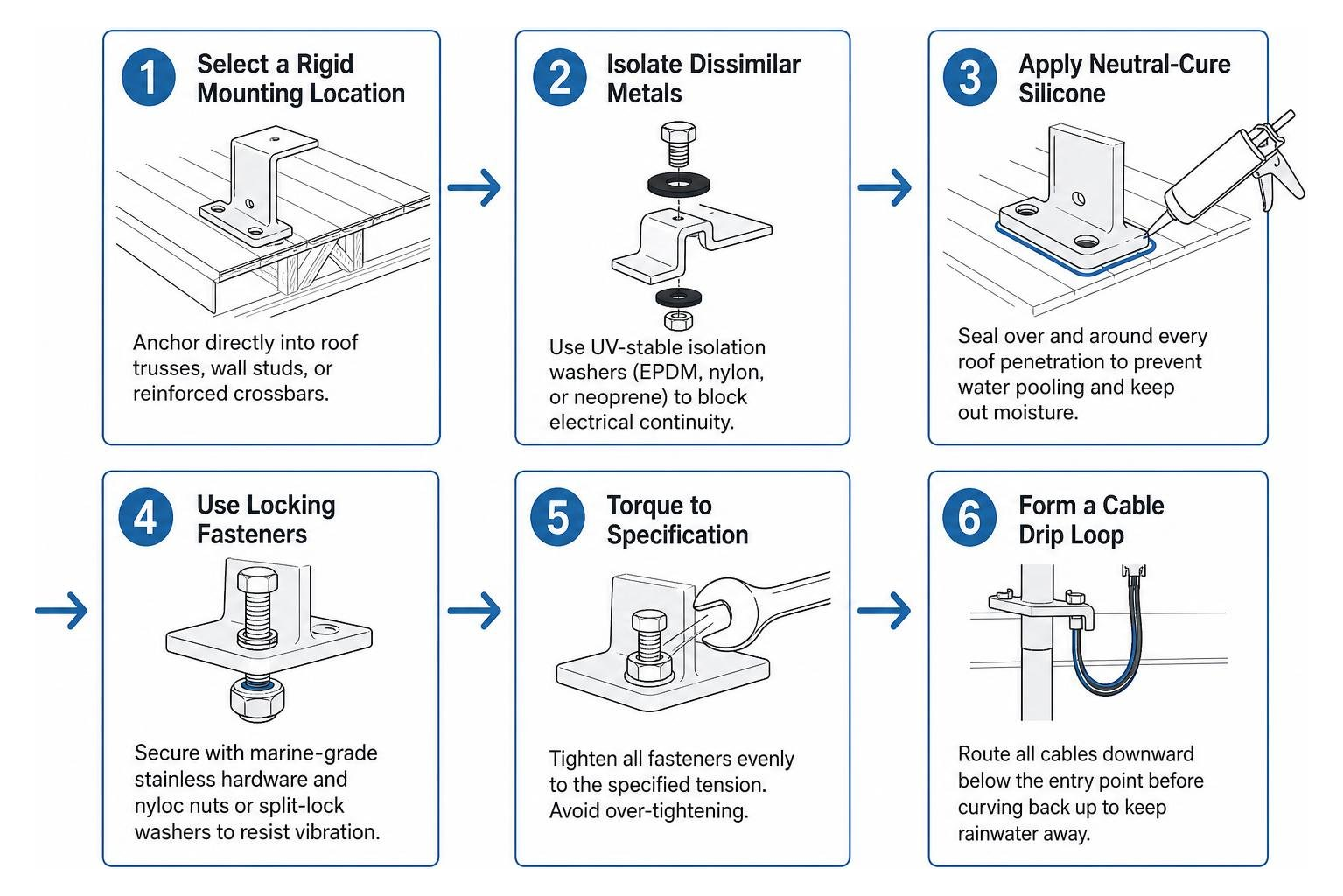
Work through the following installation steps to give the mount the best chance of lasting well:
- Select a rigid mounting location: Choose a solid structural point, anchoring directly into roof trusses, wall studs or reinforced vehicle crossbars rather than thin external sheet metal.
- Isolate dissimilar metals: Place non-conductive, UV-stable isolation washers, such as EPDM, nylon or neoprene, between different metal surfaces to block electrical continuity.
- Apply neutral-cure silicone: Apply neutral-cure silicone sealant over and around every roof penetration to prevent water pooling and seal out atmospheric moisture.
- Use locking fasteners: Secure the mount with marine-grade stainless steel hardware and nyloc locking nuts or split-lock washers to help prevent loosening from wind vibration or road corrugations.
- Torque to specification: Tighten nuts and bolts evenly to the specified tension. Avoid over-tightening, which can crush isolation washers or damage protective coatings.
- Form a cable drip loop: Route data and power cabling down below the entry point before curving it back up into the structure, so rainwater runs away from the connection point.
What Routine Maintenance Extends Mount Longevity?
A simple maintenance routine makes it easier to spot wear before it turns into a bigger mounting issue. Add these checks to your regular vehicle or property upkeep:
- Freshwater washdown: Rinse the dish mount, fasteners and clamping surfaces with fresh water every six months, or quarterly in beachfront areas, to remove salt crust and environmental grime.
- Fastener torque check: Inspect structural bolts and nyloc nuts to make sure wind buffeting and road vibration have not loosened the assembly.
- Sealant and washer inspection: Check that neutral-cure silicone is still fully adhered and that isolation washers have not degraded or cracked from thermal cycling.
- Protective coating touch-up: Check the mount frame for gouges or deep scratches from tree branches, then clean and seal exposed metal promptly.
- Cable integrity check: Make sure UV-stabilised cable ties remain snug and that wiring has not developed rub spots against sharp edges.
Frequently Asked Questions About Weatherproof Mounts
Can Precision-Machined or Folded Aluminium Mounts Withstand Direct Outdoor UV Exposure?
Yes. Aluminium does not become brittle from UV exposure in the way many basic plastics can. With a suitable marine-grade treatment or industrial powder coating, a precision-machined or folded aluminium dish mount can keep looking tidy and performing reliably outdoors for years.
What Is the Difference Between 304 and 316 Stainless Steel Mounts?
The practical difference comes down to the alloy composition. Grade 316 stainless steel contains molybdenum, which is not present in standard Grade 304. That addition improves resistance to chloride attack, helping reduce tea staining and deep pitting in ocean air. If your installation is close to the sea, 316 stainless steel or marine-treated 5052 aluminium is a sensible choice.
How Does Direct DC-to-DC Power Improve Mobile and Off-Grid Setups?
Powering communications gear through SpaceTek StarPower V2 and V3 DC power supplies can be more practical than relying on a traditional AC inverter in low-voltage off-grid systems.
- Higher operating efficiency: Direct DC-to-DC power avoids converting battery DC to mains AC and then back down again at the terminal.
- Lower power draw: Skipping a constantly running inverter can help conserve battery reserves during extended off-grid stays.
- Cleaner custom layouts: Direct DC power can bypass the standard all-in-one router, making room for custom third-party networking hardware and streamlined power management in a caravan, 4WD canopy or remote monitoring shed.
How Can You Keep a Starlink Mount Ready for Australian Weather?
Australian conditions can change fast, from dry outback heat to coastal salt air and seasonal downpours. A properly made dish mount helps your Starlink setup stay stable when the weather is doing its worst.
For a dependable setup at home or on the road, choose a precision-machined or folded aluminium mounting system that suits how you use Starlink. Browse the Starlink mounts collection for an option that fits your caravan, touring vehicle or home installation.

Leave a comment
This site is protected by hCaptcha and the hCaptcha Privacy Policy and Terms of Service apply.