

A coastal rust-resistant mount helps protect a Starlink dish from salt spray, humid air and tough Australian coastal weather. Choose a purpose-built dish mount with corrosion-resistant materials, protected fasteners and sensible drainage for a longer-lasting setup.
Key Takeaways
- Salt air can attack ordinary steel hardware far faster than inland conditions.
- Folded aluminium and marine-grade stainless steel suit exposed coastal installs.
- Separating dissimilar metals helps reduce galvanic corrosion, where metals react in salty moisture.
- A well-designed Starlink mount should shed water instead of trapping it around fasteners and joints.
- Learn more about Starlink mounting challenges by the sea before choosing an exposed installation point.
Why Do Standard Dish Mounts Fail Near the Ocean?
Standard outdoor hardware can struggle near the ocean because airborne salt settles on metal surfaces and holds moisture. That film speeds corrosion and makes a dish mount harder to service.
The main trouble spots are often easy to miss:
- Salt attack on protective finishes: Chlorides can work through damaged or thin coatings and start localised corrosion.
- Worn galvanised surfaces: Once the protective zinc layer is compromised, the steel underneath is more exposed.
- Mixed-metal contact: Aluminium and stainless steel need separation where they meet in wet, salty conditions.
- Tight joints and threads: Small gaps can collect salt and moisture, making corrosion more likely.
How Can You Prevent Galvanic Corrosion in a Mixed-Metal Assembly?
Galvanic corrosion happens when different metals touch while salty moisture creates an electrical path between them. In plain English, one metal can start wearing away faster than it should.
To reduce that risk during installation:
- Fit non-conductive nylon, neoprene or EPDM isolation washers between different metals.
- Use compatible fasteners and corrosion-resistant hardware throughout the connection.
- Apply a suitable marine-rated anti-seize compound to threaded connections.
- Separate a metal base plate from roof cladding with durable isolation material where needed.
What Makes a Coastal Rust-Resistant Mount a Better Choice?
The best coastal rust-resistant mount is built for your property's conditions, not a sunny inland site. It should use materials and finishes that stand up to salt-laden air while giving your Starlink dish a solid, stable fixing point.
Useful material choices include:
- Folded aluminium: Lightweight, rigid and naturally corrosion resistant when paired with a durable protective finish.
- Marine-grade stainless steel: A sensible choice for fasteners and high-stress connection points exposed to salt spray.
- UV-stable reinforced composite: A non-metal option that will not rust and can help avoid metal-to-metal reactions.
- Ordinary galvanised steel: Less suitable for highly exposed coastal locations because its protective layer can deteriorate over time.
For hardware designed around tough Australian conditions, explore SpaceTek's corrosion-resistant Starlink mounts.
Why Do Material Choices Matter for Coastal Starlink Mounts?
Marine-grade stainless steel is commonly used where fasteners and clamps need dependable corrosion resistance, especially at exposed connection points where salt residue can build up.
Folded aluminium gives a dish mount a strong, practical balance of rigidity and lower weight. With a quality protective finish and good design, it can suit many Australian coastal homes, sheds, caravans and off-grid setups.
When Do Reinforced Composite Components Make Sense?
UV-stable reinforced composite components do not rust and are non-conductive, so they can be useful where isolation and low maintenance matter. They are a good supporting material where metal contact needs to be managed.
Which Design Details Help a Dish Mount Handle Salt Spray?
A coastal setup needs more than the base material. Look for a dish mount with a durable finish and design that avoids holding water.

When comparing options, keep an eye on these practical details:
- Protective finishes: Durable powder coatings and other corrosion-resistant surface treatments can add another layer of defence.
- Salt-spray testing: Testing methods such as ASTM B117 can help manufacturers assess how materials and finishes perform in salty conditions.
- Weather sealing: Gaskets and protected cable entry points help keep water away from vulnerable areas.
- Structural suitability: The mount needs to suit the surface and wind exposure at the site.
For local installation considerations, see SpaceTek's guide to Australian standards for satellite mounts. If your setup is going onto sheet roofing, the National Construction Code guidance for sheet roofing is another useful Australian reference.
Why Are Drainage and Protected Fasteners So Important?
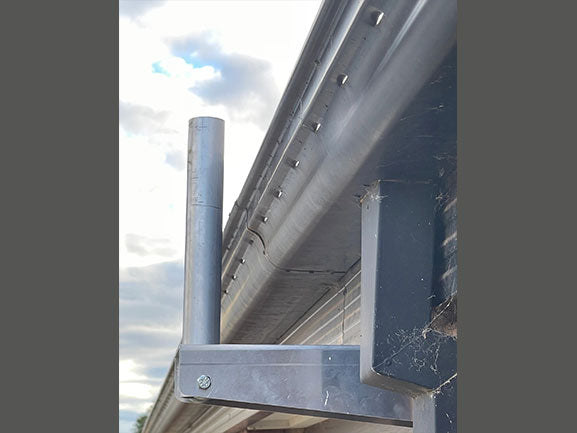
Standing water and trapped salt are bad news for any outdoor fitting. Sloped mounting feet, open drain paths and ventilated sections give moisture somewhere to go after rain, sea mist or a coastal blow.
Recessed or shielded fasteners can reduce direct exposure to wind-driven salt. That does not remove the need for maintenance, but it makes the setup easier to look after.
What Should You Check Before Installation?
Make sure the installation surface is sound, the fixing method suits the structure and all hardware is compatible. If you are unsure about wind exposure, roof construction or safe access, get qualified local advice before fitting the dish mount.
How Do Heavy-Duty Starlink Mounts Cope With Coastal Weather?
Heavy-duty Starlink mounts combine suitable materials, secure fixing points and protective details for exposed Australian locations. The aim is to keep the dish stable while limiting salt and water trouble.

The details worth prioritising include:
- Layered protection: A quality finish over folded aluminium, paired with compatible fasteners and isolating materials, gives a dish mount more than one line of defence.
- Sealed contact points: EPDM gaskets and vibration isolation can help protect the mounting surface and reduce water entry.
- Positive mechanical fixing: Choose a design that is securely fixed for the site rather than relying on a light-duty connection.
How Do You Choose a Dish Mount for High-Wind Coastal Areas?
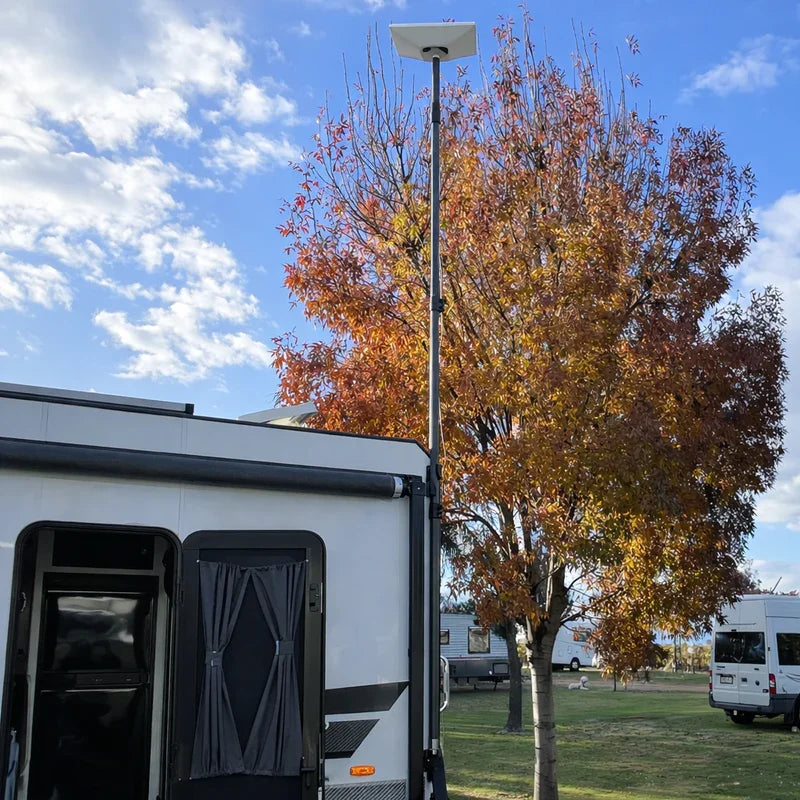
Start with the structure you are mounting to, then consider local wind exposure and the dish position. A mount that works in a sheltered suburban spot may not suit an exposed coastal roof, caravan or outbuilding.
Look for a robust folded aluminium profile, compatible corrosion-resistant fasteners and a secure mechanical connection. Avoid any setup that can flex, twist or collect water around its fixing points.
What Maintenance Keeps a Coastal Dish Mount in Good Shape?
Even quality materials appreciate regular care near the sea. A simple routine can help you spot small issues before they become a bigger headache:
- Rinse the dish mount with fresh water regularly to remove salt residue.
- Give it an extra rinse after strong onshore weather.
- Clean surfaces with mild, pH-neutral soap and a soft cloth rather than abrasive tools.
- Check fasteners, isolation materials and the mounting surface periodically for wear or movement.
What Do Homeowners Ask About Coastal Starlink Mounts?
How Close to the Coast Calls for a More Corrosion-Resistant Mount?
Any home, caravan, shed or boat that receives salty air is worth treating as corrosion-prone. The closer you are to open water and direct spray, the more important material choice, protective finishes and routine rinsing become.
Is Galvanised Steel Enough for an Oceanfront Installation?
Galvanised steel can be useful in less exposed settings, but continual salt spray can shorten the life of its protective coating. For a highly exposed coastal site, consider a purpose-built Starlink mount with more suitable materials and protective design features.
Can Aluminium and Stainless Steel Be Used Together?
They can, provided they are properly isolated. Use suitable non-conductive washers or pads between dissimilar metals so salty moisture cannot easily create the conditions for galvanic corrosion.
Ready to Protect Your Starlink Setup From Coastal Corrosion?
Salt spray, humidity and strong coastal weather can be hard on outdoor hardware, but a well-chosen dish mount makes a real difference. Prioritise corrosion-resistant materials, compatible fasteners, proper drainage and maintenance that suits your location.
Before choosing a coastal rust-resistant mount, have a close look at where the dish will sit. Consider the roofing material, how exposed the position is to sea mist and wind, whether water can drain freely, and whether the fixing points can be reached safely for future checks. A setup that is easy to inspect and rinse is usually easier to keep in good shape over the long run.
It is also worth planning for ordinary maintenance from day one. Give the dish mount a fresh-water rinse after rough coastal weather, keep an eye out for salt build-up around fasteners and isolation pads, and address worn finishes before corrosion has a chance to spread. If the roof is steep, exposed or difficult to access safely, qualified local advice can help you choose a practical mounting position.
SpaceTek Australia specialises in Australian-designed Starlink accessories and rugged dish mounts for demanding conditions. Browse the heavy-duty residential Starlink mount range to find a setup suited to your installation.


Leave a comment
This site is protected by hCaptcha and the hCaptcha Privacy Policy and Terms of Service apply.